
Most people think of Fresno as a residential real estate market. They overlook something that investors paying attention already know: Fresno sits at the center of one of the most strategically important logistics corridors in the United States.
I specialize in commercial and industrial real estate in the Central Valley particularly properties that serve the trucking, transportation, and logistics industries. This guide is for investors, business owners, and operators who are looking at Fresno's industrial market in 2026 and want to understand what they are looking at.
Why Fresno is a Logistics Powerhouse
Geography is everything in logistics, and Fresno's geography is exceptional.
Fresno sits at the midpoint of California's Highway 99 corridor, the main freight artery running from Sacramento in the north to Los Angeles in the south. Every truck moving agricultural goods, manufactured products, or distribution inventory along the California spine passes through or near Fresno.
Beyond Highway 99, Fresno has direct Interstate 5 access to the west (via Highway 33 and 198).
The result: Fresno is a natural distribution hub. It serves day-cab routes to Sacramento (about 2.5 hours), Stockton, Bakersfield, Los Angeles (about 4 hours), and the Bay Area. A single driver can service multiple major California markets from a Fresno base without violating hours-of-service regulations.
This is why large distribution and logistics operations have been establishing and expanding in the Fresno market for years and why the demand for industrial and commercial real estate here is not going away.
The Agricultural Connection: Why This Market Is Unique
Fresno County is the most productive agricultural county in the United States. Over $8 billion in agricultural products are grown here annually — almonds, grapes, tomatoes, stone fruit, pistachios, and dozens of other crops.
That production volume requires an enormous support infrastructure: cold storage, packing facilities, refrigerated transport, distribution centers, and the trucking operations that connect the field to the consumer.
This is not seasonal demand. Agricultural logistics in the Central Valley operates year-round, with peak seasons that shift by commodity. What it creates is a structural, permanent demand for industrial real estate that does not exist in most other California markets.
For investors looking at long-term, stable tenants in the industrial and commercial space, agricultural logistics tenants are among the most durable in California real estate.
Types of Industrial Properties in the Fresno Market
Trucking Terminals and Truck Yards
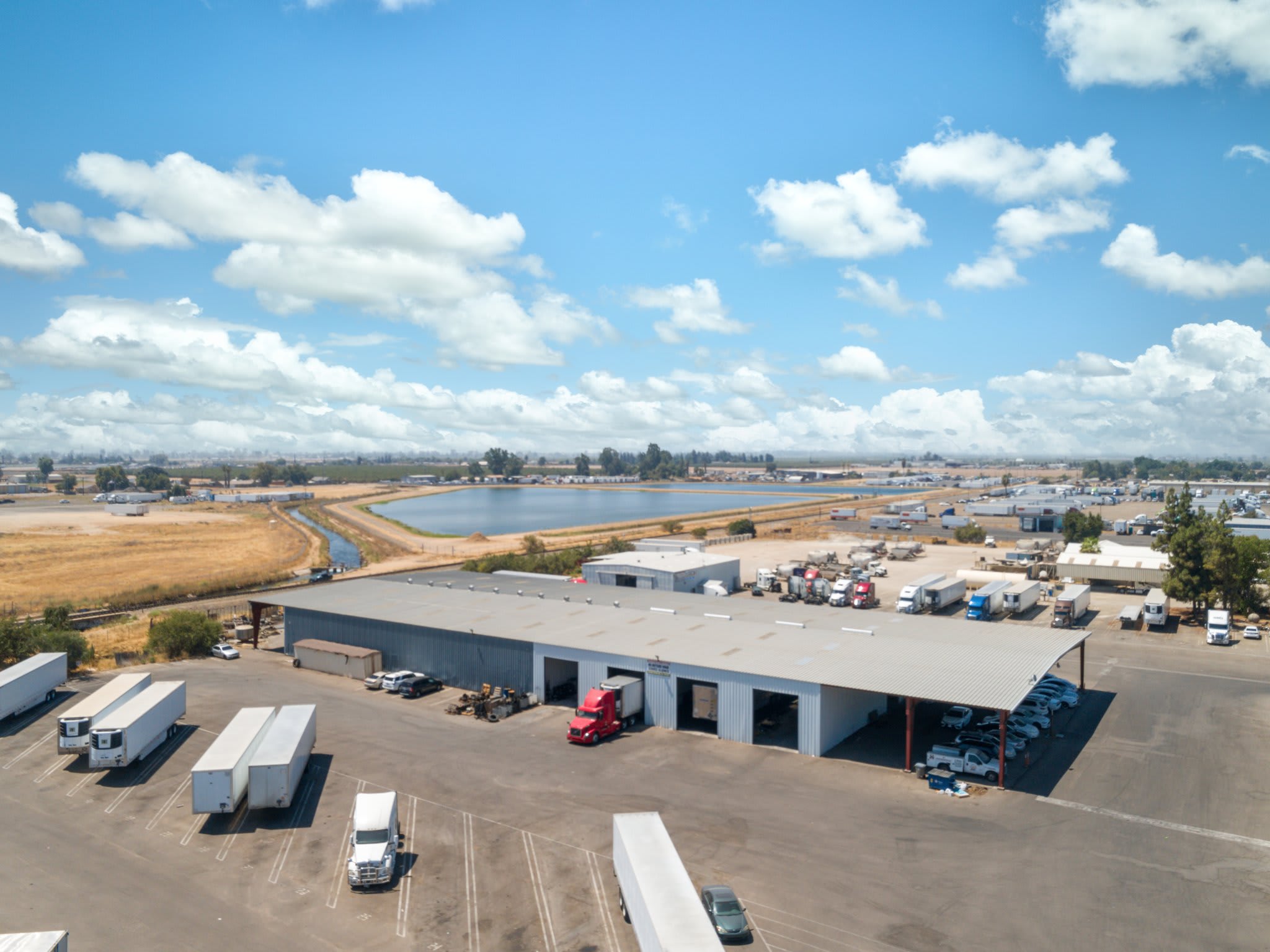
Truck yards: Secured lots with tractor/trailer parking, office space, and often maintenance bays are among the highest-demand industrial properties in the Fresno market. The combination of Highway 99 access, space availability, and relatively lower land costs compared to coastal California makes Fresno an attractive home base for fleet operations.
Key considerations for trucking terminal properties:
- Zoning: Light to Heavy industrial (IL/IH) or M1/M2 required
- Access: Wide radius for 53-foot trailer turns is essential
- Utilities: High-amperage power for truck charging/maintenance
- Location: Proximity to Highway 99 and major arterials without navigating urban congestion
Distribution and Warehouse Facilities
E-commerce growth has driven consistent demand for distribution space throughout the Central Valley. Fresno's central California location makes it attractive for last-mile distribution serving a large regional population.
Modern distribution facilities in Fresno typically range from 50,000 to 500,000+ square feet. Industrial vacancy rates in the greater Fresno area have remained relatively tight despite new development, reflecting genuine underlying demand.
Cold Storage and Agricultural Processing
The agricultural economy generates strong demand for refrigerated warehouse and cold storage facilities. These are specialized assets with higher build costs but also higher rental rates and sticky tenants.
Flex and Light Industrial
Smaller operators like HVAC companies, electrical contractors, auto repair, light manufacturing need flex space. This is often a 2,000–10,000 sq ft unit combining warehouse and office. Flex industrial parks in Fresno serve a large population of small business owners and tend to have strong occupancy.
Commercial/Industrial Land
For investors and operators who want to build to suit, commercial and industrial-zoned land in Fresno remains significantly cheaper than any comparable California coastal market. Strategic land banking along Highway 99 access corridors has historically been a strong play.
Fresno Industrial Market: 2026 Snapshot
The Fresno industrial market in 2026 reflects competing pressures: continued demand from logistics and distribution operators, new speculative development adding inventory, and some softening in absorption rates compared to the pandemic-era peak.
Key dynamics I am watching:
Vacancy has ticked up slightly from historic lows as speculative projects delivered, but demand fundamentals remain solid. Quality properties in strong locations are not sitting.
Lease rates have held better than many expected. For Class A industrial space in the Fresno metro area, lease rates range from approximately $0.65 to $1.10 per square foot per month NNN, depending on building quality, clear height, and location.
Owner-users are active. With SBA 504 financing available for owner-occupied commercial properties, business owners are choosing to buy rather than lease. This is compressing the available inventory of quality smaller industrial buildings (under 30,000 sq ft).
Trucking-specific properties are tight. Secured truck yards with good Highway 99 access are consistently in demand and rarely sit on the market long when priced correctly.
What to Look for When Investing in Fresno Industrial Real Estate
After working with investors and owner-users across residential, commercial, and industrial property in this market, here is what I advise:
1. Zoning is everything, verify it yourself. Do not rely on the listing description for zoning. Pull the parcel data directly from the City of Fresno or Fresno County planning department. The difference between M1 (light industrial) and M2 (heavy industrial) can determine what is legal or not on a given parcel.
2. Location along the 99 corridor commands a premium for good reason. Properties with direct or close Highway 99 access are worth paying up for. The operational efficiency of not having your drivers navigating surface streets through commercial areas compounds over time.
3. Understand the tenant profile before you buy. A building that has housed agricultural tenants may have specific infrastructure requirements like floor drains, heavy electrical, particular ceiling clearances that limit the next tenant pool. Know what you are buying.
4. Environmental due diligence matters. Industrial properties carry higher environmental risk than residential. Soil contamination from previous uses is a real issue in some Fresno industrial areas. Phase I and, if warranted, Phase II environmental assessments are non-negotiable.
5. Work with an agent who actually understands this market. Industrial real estate in Fresno is a small enough market that relationships matter enormously. Off-market deals happen regularly. A residential agent dabbling in commercial is not the same as an agent who has built relationships in this specific sector over years.
The Opportunity Nobody Is Talking About
Here is the honest observation I make to every investor I work with who is new to this market: Fresno industrial is still pricing at a meaningful discount to comparable markets in the Inland Empire, Sacramento, and the Bay Area.
That gap has been narrowing. But it has not closed.
For investors who understand what they are buying, the combination of California's strongest logistics geography, agricultural-driven demand, and a relative price discount to coastal markets creates a window that will not stay open indefinitely.
The operators and investors who are here already know this. The question is whether you are paying attention.
Let's Talk About What You're Looking For
Whether you are a trucking operation looking for a terminal location, an investor evaluating industrial land or buildings, or a business owner considering owning your own commercial space, I would like to be the person you talk to first.
I have spent years building expertise specifically at the intersection of commercial real estate and the transportation and logistics industry in the Central Valley. I know this market in a way that most agents do not.
Contact me here or reach out directly:
- Call or Text: (559) 905-5228
- Email: hirdeys@gmail.com
- Website: www.paulsinghrealtor.com
Paul Singh specializes in residential, luxury, and commercial/industrial real estate in Fresno and Clovis, CA. He has served the Central Valley market for over 12 years with a particular focus on trucking and logistics-related commercial properties. CA DRE# 01878751.